

In modern agriculture, the agricultural submersible pump has become an essential tool for every farmer who wants to improve irrigation efficiency and conserve water. Thanks to advancements in pumping technology, these systems can now deliver water precisely where it’s needed — at a steady pressure — making them the beating heart of both drip and flood irrigation systems across Saudi Arabia.
What’s the Difference Between an agricultural submersible pump and a Fountain Pump?
Although their names sound similar, their purposes are completely different.
An agricultural submersible pump is designed specifically for heavy-duty work — drawing water from deep wells or storage tanks to feed irrigation networks. It’s built to withstand harsh conditions such as high temperatures, variable water pressure, and continuous operation.
A fountain pump, on the other hand, serves decorative purposes. It powers fountains, small waterfalls, and indoor water features. Its capacity is limited, and it’s not made for long operating hours or handling water with impurities.
In short:
- The fountain pump is for decoration.
- The agricultural pump is for production and serious fieldwork.
The Role of Agricultural Pumps in Drip Irrigation
Submersible pumps play a central role in drip irrigation systems — especially in Saudi Arabia’s arid regions, where water resources are limited.
Their job is to lift water from its source — whether a well, tank, or small dam — and deliver it through the network of pipes and drippers at consistent pressure, ensuring each plant receives the right amount.
Most farmers prefer electric or solar-powered submersible pumps because they are energy-efficient and ideal for desert climates where sunlight is abundant year-round.
This combination helps achieve the perfect balance between water conservation and increased agricultural productivity — a goal shared by every Saudi farmer.
How to Determine the Right Pump Power
Choosing the right agricultural pump isn’t random — it depends on several key factors:
- The total area of land to be irrigated
- The depth of the water source (greater depth = higher power required)
- The pressure needed for the drip irrigation system
- The crop type (some plants require more water than others)
Example:
If your farm covers 5 hectares and uses a drip irrigation system, you’ll need a pump with at least 3–5 horsepower.
For deeper wells exceeding 60 meters, you may require a 7.5 HP pump or higher.
Golden rule:
Always choose a pump slightly above your minimum need — never below it.
The Most Common Agricultural Pumps in the Saudi Market
The Saudi market offers a wide variety of agricultural pumps from different origins and designs. The most
popular types include:
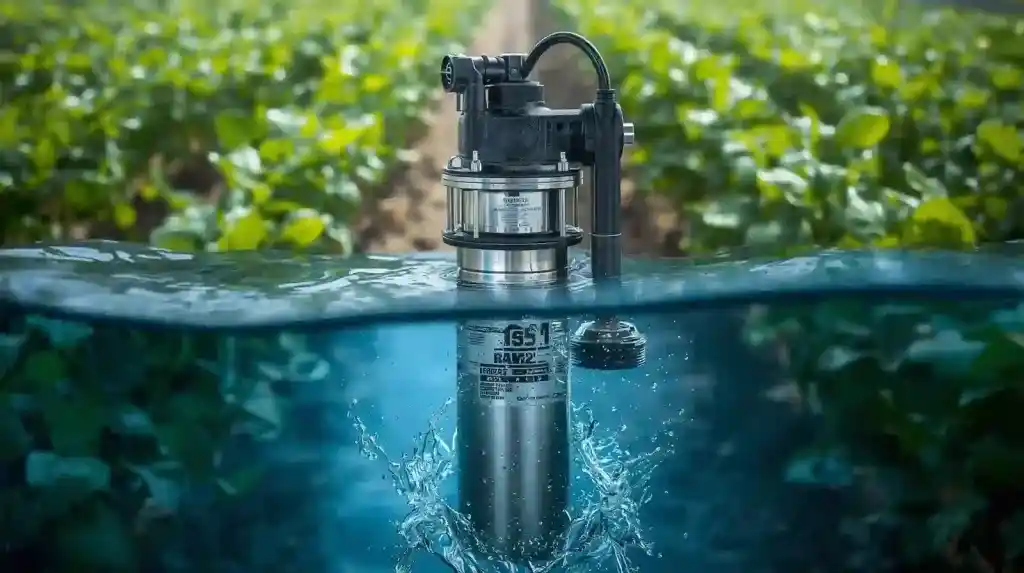
1. Stainless Steel Submersible Pumps
- Corrosion-resistant and ideal for slightly saline groundwater.
- Excellent choice for farms in coastal regions.
2. Multistage Suction Pumps
- Designed for deep wells.
- Provide high pressure and outstanding performance for drip irrigation systems.
3. Solar-Powered Pumps
- A top choice in Saudi Arabia.
- Operate without electricity and reduce running costs by up to 70%.
4. Chinese and Italian Pumps
- Chinese models are known for affordability.
- Italian brands, such as Speroni and Metro, are recognized for quality, long lifespan, and reliability in large-scale agricultural operations.
Maintenance Tips for Longer Pump Life
Even the best pumps require regular care. Preventive maintenance not only preserves performance but also avoids costly downtime during the irrigation season.
Here are some essential tips:
- Clean filters and pipes regularly to prevent clogging.
- Check cables and ensure proper electrical insulation.
- Lubricate moving parts if the pump is mechanically driven.
- Never run the pump without water — it can quickly damage the motor.
- Store the pump in a dry, shaded place when not in use.
A little care today saves major expenses tomorrow — and can double the lifespan of your pump
Investing in the Right Pump for Long-Term Success
Choosing the right agricultural submersible pump is a long-term investment in the success of your farm.
With the right model, you’ll enjoy steady water flow, efficient irrigation, and reduced energy and water consumption.
As agriculture in Saudi Arabia moves toward smart, sustainable solutions, modern pumps — especially solar-powered models — represent the future for every forward-thinking farmer.
To ensure you choose the ideal pump for your project — based on well depth, required flow rate, and horsepower — we strongly recommend contacting the sales team at Advanced Pumps (NOP).
You can reach their technical experts directly via WhatsApp for p